

Dry Eye Relief in Longmont, CO
Dry Eye FAQs
Colorado's Climate and Chronic Dry Eye
If your eyes feel gritty, burning, watery, or uncomfortable by the end of the day, you may be dealing with dry eye disease. A chronic condition that affects the quality or quantity of your tear film. Colorado's high altitude and dry climate make it one of the most common reasons patients in Longmont seek an eye evaluation. When dry eye is left unmanaged, it can cause ongoing damage to the ocular surface and make contact lens wear increasingly difficult.
- Tear film assessment -- evaluates the stability and quality of your tears
- Ocular surface evaluation -- checks for damage to the cornea and conjunctiva caused by chronic dryness
At Focus Vision, dry eye evaluations are thorough and patient-specific. Dr. Cottrell and Dr. Gutierrez assess your symptoms in the context of your lifestyle, environment, and health history to build a management plan that addresses the actual cause of your dry eye, not just the symptoms.
What Causes Dry Eye and Why It Gets Worse in Colorado
Dry eye disease occurs when your eyes do not produce enough tears, or when the tears you produce evaporate too quickly. The result is an unstable tear film that leaves the surface of the eye exposed and irritated. Symptoms can range from mild discomfort to significant vision fluctuation and sensitivity to light.
At altitude, Colorado's low humidity and intense UV exposure accelerate tear evaporation. Screen time, extended contact lens wear, certain medications, and hormonal changes can all compound the problem. Many patients in Longmont experience dry eye seasonally, particularly in winter when indoor heating further dries the air, but for others it is a year-round condition that worsens without consistent management.
We Take An Evidence-Based Approach to Dry Eye Treatment
Focus Vision focuses on evidence-based treatments for dry eye. Our approach is thorough evaluation, honest guidance, and practical home-based management that patients can sustain over time. For many patients, this is exactly what is needed: a clear diagnosis and a realistic plan that actually gets followed.
Dry eye disease occurs when the eyes do not produce sufficient tears, or when the tears evaporate too quickly to maintain a stable film on the eye surface. The result is chronic irritation of the cornea and conjunctiva. Colorado's low humidity and high altitude accelerate tear evaporation, making dry eye particularly common among Longmont patients, especially those who spend time outdoors, work in heated buildings, or use screens for extended periods.
A dry eye evaluation at Focus Vision includes a review of your symptoms, a tear film assessment, and an ocular surface evaluation to check for surface damage caused by chronic dryness. Your doctor will assess the quantity and quality of your tears, evaluate your meibomian gland function, and review contributing factors including medications, screen use, and environmental conditions.
Dry eye is a chronic condition for most patients. Consistent use of the recommended treatments typically reduces symptoms significantly. Patients who follow their management plan see steady improvement. How much improvement depends on the severity of the underlying condition and how consistently the plan is followed.
Focus Vision uses conservative treatments for dry eye: artificial tears, prescription dry eye medications when appropriate, warm compress therapy, and lid hygiene. Advanced in-office dry eye devices such as IPL, LipiFlow, TearCare, or BlephEx are not available at this practice. If you have questions about which treatments are appropriate for your condition, a dry eye evaluation is the right starting point.
Artificial Tears and Lubricating Drops
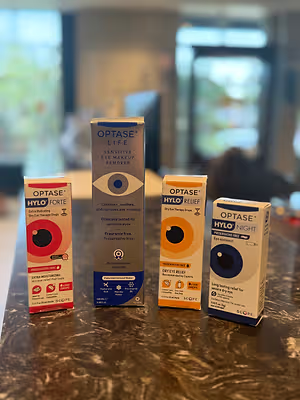
The foundation of dry eye management. Lubricating eye drops replace or supplement your natural tear film to reduce surface irritation. Your eye doctor will recommend a specific formulation and frequency based on your tear film assessment.
Prescription Dry Eye Medications
Warm Compress Therapy
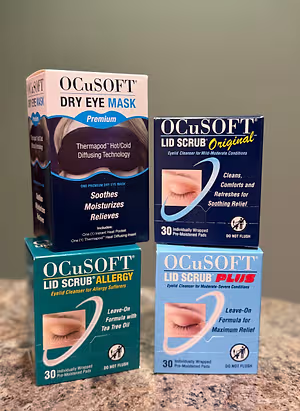
Applying a warm compress to closed eyelids for 10 to 15 minutes daily helps unclog the meibomian glands that produce the oily layer of your tear film. This is one of the most consistently effective home treatments for evaporative dry eye and is recommended as part of most dry eye management plans.
Lid Hygiene
Symptoms That May Indicate Dry Eye Disease
These are the symptoms that most commonly bring patients in for a dry eye evaluation:
- Burning, stinging, or scratchy sensation in the eyes
- Gritty feeling, as if something is in the eye
- Excessive tearing (a reflex response to dryness)
- Red or irritated eyes
- Blurry vision that fluctuates throughout the day
- Sensitivity to light or wind
- Difficulty with contact lens wear
- Eye discomfort after screen use or reading
- Worsening symptoms in dry, heated, or air-conditioned environments
Schedule a Dry Eye Evaluation in Longmont
If you are experiencing persistent eye discomfort, fluctuating vision, or difficulty with contact lenses, a dry eye evaluation at Focus Vision is a practical next step. Call (303) 776-1620 or book online to schedule. We are open Monday through Friday, 9:00 AM to 5:00 PM at 1630 Hover Street, Suite A in Longmont.